
Indigenous fire practices, bushfires and country homes: Building a resilient community

Well, it is another weekend at home and another week of 2020 gone thinking when the current pandemic is going to get over (or at least get better!). While I understand these are very difficult times, I do believe in the need to stay focused on preparing for the future. One of the things I want to talk about today is Bushfire during the Australian Summers!
The Backstory
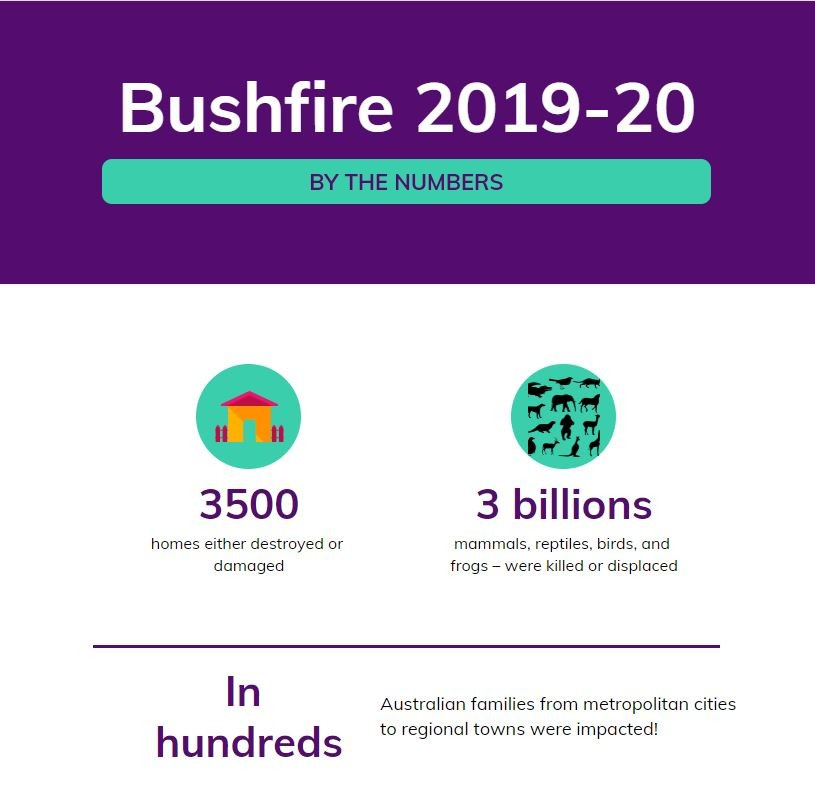
Bushfire and the approaching summer are something we need to prepare for! I agree that we have lost enough due to Covid-19. However, a simple google search for damages and losses in the last summer raised all the alarms for me this weekend. Below is a crude view of the data which triggered me to venture into some readings and activities to help prevent extreme wildfires.
After going through some online news articles on managing bushfire events and making a visit to the Museum of Fire in Penrith (NSW), finally, a well-written book by Victor Steffensen named Fire Country caught my attention and compelled me to pen down my thoughts on the subject.
Before I dive deeper into the Australian bushfire, let me share some of the basic understanding about fire and how it spreads . . .
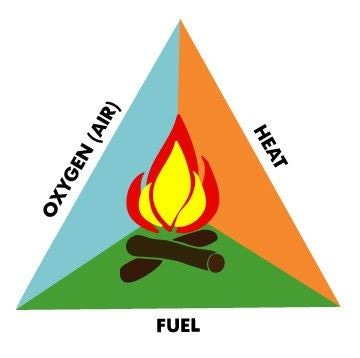
Fire is basically a chemical chain reaction. To have a fire, it needs air, heat and fuel (refer below the triangle of fire). So, in the case of bushfire, the hot summer weather provides the heat, the vegetation (grasses, leaves, etc) acts as the fuel and the wind brings in oxygen. It is important to note that the more abundant and drier the fuel, the more intense the fire will burn.
So, why does Indigenous cultural burning matter?
Well, one of the most important decisions one need to make to protect one’s family and oneself during a bushfire season is - “Leave Early or Stay and Defend a well-prepared property”.
Regardless of the decision, preparation is the key to survival!
Preparation not only means building houses to comply with the National Construction Code (NCC) but also requires a commitment to take a number of measures to prepare the property and surrounding vegetation (fuel for bushfire). I recorded an important statement made by a CSIRO expert in the news regarding the maintenance of the property. His exact words were -
You could have a fantastic architect-designed house with plenty of cool features but if, in the first year of ownership, they build a garden shed off the side of it, all of a sudden the whole house is as weak as its weakest link.
What the traditional cultural burning does is it reduces the fuel loads as well as creates fire breaks limiting the spread of wildfires to adjoining housing sites. It is important to highlight that ‘Fire’ is an important symbol in Aboriginal culture. Aboriginal communities know best how fire can be used to care for country.
I am now going to quote Lynette Russell (Prof. at Monash University) who did an excellent job at summarizing the process of cultural burning –
Cultural burns are carried out by people on foot who carefully monitor the fire so it doesn’t run out of control, and so the animals in the area have a means of escape. These burns are smaller, cooler and more labour-intensive than the more common hazard reduction burns.
Traditional fire practices have several benefits:
Ecologically sustainable
Self-extinguishing and reduces the vegetation load for the bushfire events
Circumvent use of chemical weed killers to remove fuel loads such as grasses. The cool burn does the job of chemicals.
I believe it is time we re-introduce cultural burning and engage with the Aboriginal people to understand and implement the fire management techniques to build resilient Australian communities.
Building Code of Australia
So, with proper implementation of cultural burning, we have the potential to prepare our property and housing sites for a major bushfire. However, will this be enough to feel safe within our country homes?
I guess no. We need to ensure that our houses are built to withstand the effects from bushfire. In case, the house cannot resist the fire, we ought to have a contingency plan to survive.
The Australian Standard (AS) – 3959: Construction of Buildings in Bushfire Prone Areas is a directly referenced document in the Building Code of Australia which provides minimum requirements for building elements such as windows, glazing, doors, walls, etc to withstand the radiant heat and flames due to wildfires. There have been pieces of evidence of houses with ‘no-gap-in-the-building’ approach that have survived the fires of last summer.
However, it is important to emphasize the fact that provisions of the Building Code of Australia do not prescribe requirements for a bushfire-proof building. The requirements in the Code only help to improve the ability of buildings in bushfire-prone areas to better withstand attack from bushfire. I have read many articles criticizing the Building Code for not doing enough. But, it is important to understand that Codes and Australian Standards are living document which organically evolves over-time. More so, the Building Code is a performance-based document; meaning it doesn’t specify how a building must be built, but how a building must perform. This means innovative designs, materials and construction methods can be readily approved. In my opinion, the design decisions eventually are to be made by the architects/engineers/builders. They may choose to adopt either
Deemed-To-Satisfy provisions of AS-3959, or
Performance-based solutions (based on testing or engineering solutions).
Whatever be the option, the cost of building bushfire resistant homes need not be prohibitive. There are plenty of free resources available to assist local builders and architects to make an informed design decision. Some of the freely available resources are as follows:
Australian Standard (AS) 3959 - Construction of buildings in bushfire-prone areas available for free download. Please click here and select product format as ‘PDF 1 User – English’ for the free download.
The Australian Glass and Window Association has published a user-friendly guide on windows and glazed doors in bushfire-prone areas to assist industry professionals in navigating the requirements of AS 3959 specific to windows and doors. For more information, click here.
Note: Please consult experts before implementing the requirements from these resources to be doubly sure!
Conclusion
A holistic approach to design building and prepare its surrounding land is required to better fight Australian bushfires. Perhaps a lot can be learnt from the traditional fire practices to maintain and nurture the land around country homes. A combination of cultural burning and well-designed homes are our way forward to mitigate the risk due to extreme wildfires!